Rust solo survival or group play which is better for a long wipe and why the solo route still wins
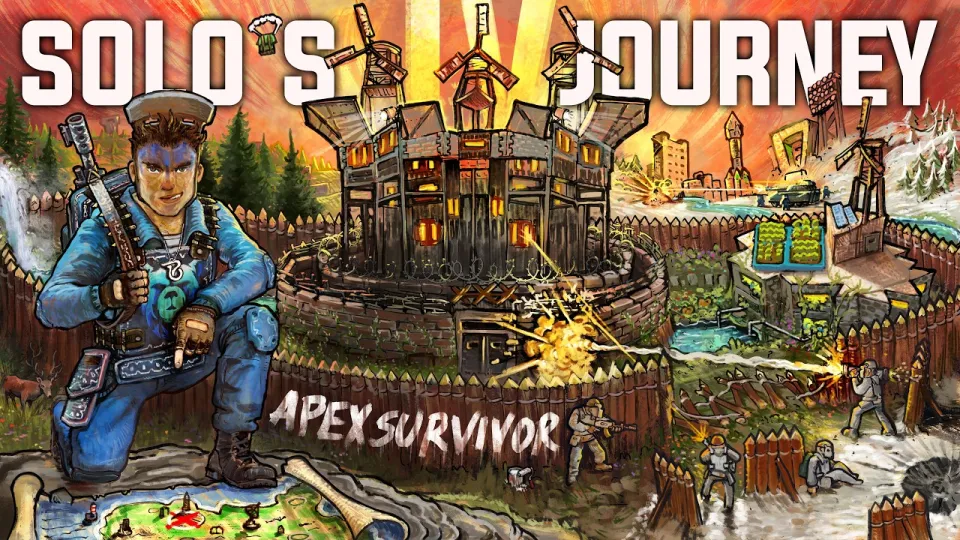
Video: Rust - A Solo's Journey IV: Apex Survivor (Movie)
You can order the same kind of articles for your own video to boost it on YouTube and Google. Just message the Telegram bot @sat_sit_bot. Articles with your video embedded are written and posted by the bot itself — on popular topical sites (no ads). Free trial — 50 articles.
Rust solo survival is better than group play for players who value planning over manpower: a solo run on a long wipe rewards map knowledge, disciplined base building and careful raid timing instead of raw numbers. Blooprint's movie A Solo's Journey IV: Apex Survivor documents exactly that approach across 14 days on one server, and the companion tracker at solosjourneytracker.com lets you type in any timestamp and see the solo's progress at that moment. The result is a case study in how one player turns a wipe into a campaign rather than a scramble.
What a 14-day solo Rust run actually demands
A long solo wipe is a test of routine, not reflexes; the player who logs in with a plan outlasts the player who logs in with gear. Fourteen days on a single server means the map's politics shift several times, neighbours come and go, and the base you build in the first hours decides whether you are still relevant in the second week.
The movie's structure reflects that: 12 chapters plus an epilogue, spread across a runtime of roughly four hours and fifty minutes, with the intro alone taking under two minutes before the first chapter opens. Filming and editing the project took more than 300 hours according to the creator, which is a useful reminder that a solo campaign is mostly preparation you never see on screen.
Key demands of the format:
- A base that is cheap to expand and expensive to raid, so early setbacks do not end the run.
- A farming loop you can repeat without thinking, because solo progression is measured in stacks, not kills.
- A schedule for monuments and events such as oil rig and cargo ship, since contested loot is where solos gain the most per hour.
- Restraint on raids: every explosion you craft is time you did not spend farming.
Base building choices that keep a solo alive
Base design is the single biggest lever a solo player controls, because a base that survives the first raid attempt saves days of progress. The community discussion around the movie singles out a triangular core layout as an unorthodox but effective answer, paired with a farm base that keeps resources close and exposed structures expendable.
The logic is straightforward. A group can afford a large footprint because it has bodies to defend it; a solo cannot. Compact cores, redundant loot rooms and a separate farming outpost mean that losing a front door costs materials rather than the wipe. When viewers praise a base for being "not meta but worth it," they are describing exactly this trade: unconventional geometry that raiders have not practised against.
Practical rules that carry over to any solo wipe:
- Build the core first and the comfort later; a bed and a box beat a window.
- Keep the best loot in the least obvious room, not the most reinforced one.
- Split sulfur and gunpowder across two locations so one raid cannot arm your enemy.
- Treat the farm base as disposable and stock it accordingly.
Oil rig, cargo ship and the solo loot calendar
Monuments are where a solo closes the gear gap, because a group spreads across the map while a solo must choose the highest-value target per hour. Oil rig and cargo ship appear in the movie's tag list for good reason: they are the events that convert a primitive start into military-grade equipment, and they are also where a solo is most likely to meet a group.
The working approach is timing rather than force. Hit contested monuments when server population dips, bring enough meds to survive the NPCs, and leave with the loot instead of fighting for the last crate. On cargo ship, the deck layout punishes anyone who boards late and loudly; on oil rig, the verticality means the first player to the top usually controls the extraction.
A simple solo calendar for a long wipe:
- Early wipe: roads, barrels and low-tier monuments for tools and scrap.
- Mid wipe: oil rig and cargo ship runs once you can craft meds and a decent kit.
- Late wipe: helicopter and heavy events only if you have a safe route home and a place to store the haul.
Raiding, revenge and server politics as a solo
Raids in a solo run are a budgeting problem before they are a combat problem; the movie's chapter list and audience reaction make clear that the memorable raids are the ones with a reason behind them. Viewers responded strongly to a sequence where a clan dealt with hostile neighbours, calling it the most deserved raid they had seen, which says something about how much weight the community puts on justified conflict over random destruction.
For a solo, three questions decide whether a raid is worth it:
- Can you carry the loot home in one trip, or will a second run expose you?
- Do you know who else is online and how fast they can counter?
- Will removing this base make your next week easier, or create a vacuum a bigger group fills?
Revenge raids are emotionally satisfying and strategically risky. The players who last 14 days solo tend to raid for space, resources or safety, and let the personal grudges wait until the wipe is already won.
Why viewers treat a five-hour Rust movie as essential viewing
The audience reaction to A Solo's Journey IV explains the format's appeal better than any marketing copy: comments note that a runtime near five hours reads as a gift rather than a commitment, and that the storytelling, pacing and callbacks make it feel like a series finale rather than gameplay footage. Others point out that the channel's strength is range, combining relaxed survival, narrative and high-level PvP in one package.
The milestone context matters too. The movie was released as a thank-you for 2.5 million subscribers, and the production values reflect it: an animated intro, cinematic help, motion design and a licensed soundtrack. For anyone curious about Rust without playing it, this is the closest thing to a feature film the survival genre has produced.
Common questions about solo Rust answered
Most doubts about solo play come down to time and temperament, and the honest answer is that solo Rust is slower, not harder in the mechanical sense. A solo who plays four focused hours gains more than a group member who plays eight distracted ones, because every decision has a visible cost.
The recurring concerns from viewers and new players:
- Time investment: a long wipe suits players who can log in consistently rather than in one marathon session.
- Gear fear: losing a kit matters less when your stash is split and your base is cheap.
- Group pressure: solos survive by avoiding fights they cannot finish, not by winning every fight they start.
- Motivation: setting small goals per session, such as one monument run or one upgrade, keeps a two-week wipe from feeling endless.
Useful links
- Progress tracker for the solo run: https://solosjourneytracker.com
- Youtooz vinyl figure: https://youtooz.com/products/blooprint
- Epic Desk mousepads and playmats: https://epicdesk.shop/collections/blooprint
- Animated intro studio: https://x.com/highresolution0
- Thumbnail artist: https://twitter.com/veys_el_kara
Final takeaway
Solo Rust on a long wipe is a discipline test that rewards planning, compact base design and a loot calendar built around oil rig and cargo ship rather than around fights. Blooprint's A Solo's Journey IV shows the format at its most complete, and the effort behind it, over 300 hours of filming and editing for 14 days of play, sets a benchmark for survival storytelling on the channel. If you want to follow the run step by step, open solosjourneytracker.com, enter a timestamp and watch the progress unfold alongside the movie. The channel Blooprint is the author of this breakdown and the source of the run itself.
Key takeaways
- Blooprint's A Solo's Journey IV covers 14 days of solo Rust across a nearly five-hour movie with 12 chapters plus an epilogue.
- The project took over 300 hours of filming and editing and was released to mark 2.5 million subscribers on the channel.
- A companion site at solosjourneytracker.com lets viewers enter a timestamp and see the solo progress at that point of the run.
- Solo play on a long wipe trades group manpower for planning: smaller bases, timed monument runs, and raids chosen carefully.
- Limited merch tied to the milestone includes a Youtooz vinyl figure and Epic Desk mousepads with fixed order windows.
Questions & answers
How long does it take to watch A Solo's Journey IV?
The movie runs about four hours and fifty minutes, split into an introduction, 12 chapters and an epilogue. The chapter markers make it easy to watch in several sittings, and the companion tracker shows the solo's progress for any timestamp you enter.
Is solo Rust actually viable on a long wipe?
Yes, provided you trade ambition for consistency. A compact base with a redundant core, a repeatable farming loop and timed runs to oil rig and cargo ship let a solo stay relevant for two weeks without a group.
What base design works best for a solo player?
Compact layouts with an unusual core, such as the triangular design discussed around this movie, work well because raiders have not practised against them. Pair the core with a cheap farm base so a lost front door costs materials rather than the whole wipe.
Should a solo player raid for revenge or for resources?
Resources, space and safety come first. Revenge raids are memorable but they consume sulfur and time that a solo needs for progression, so most experienced solo players delay personal grudges until the wipe is already under control.
Source: Rust - A Solo's Journey IV: Apex Survivor (Movie) · Markdown version